
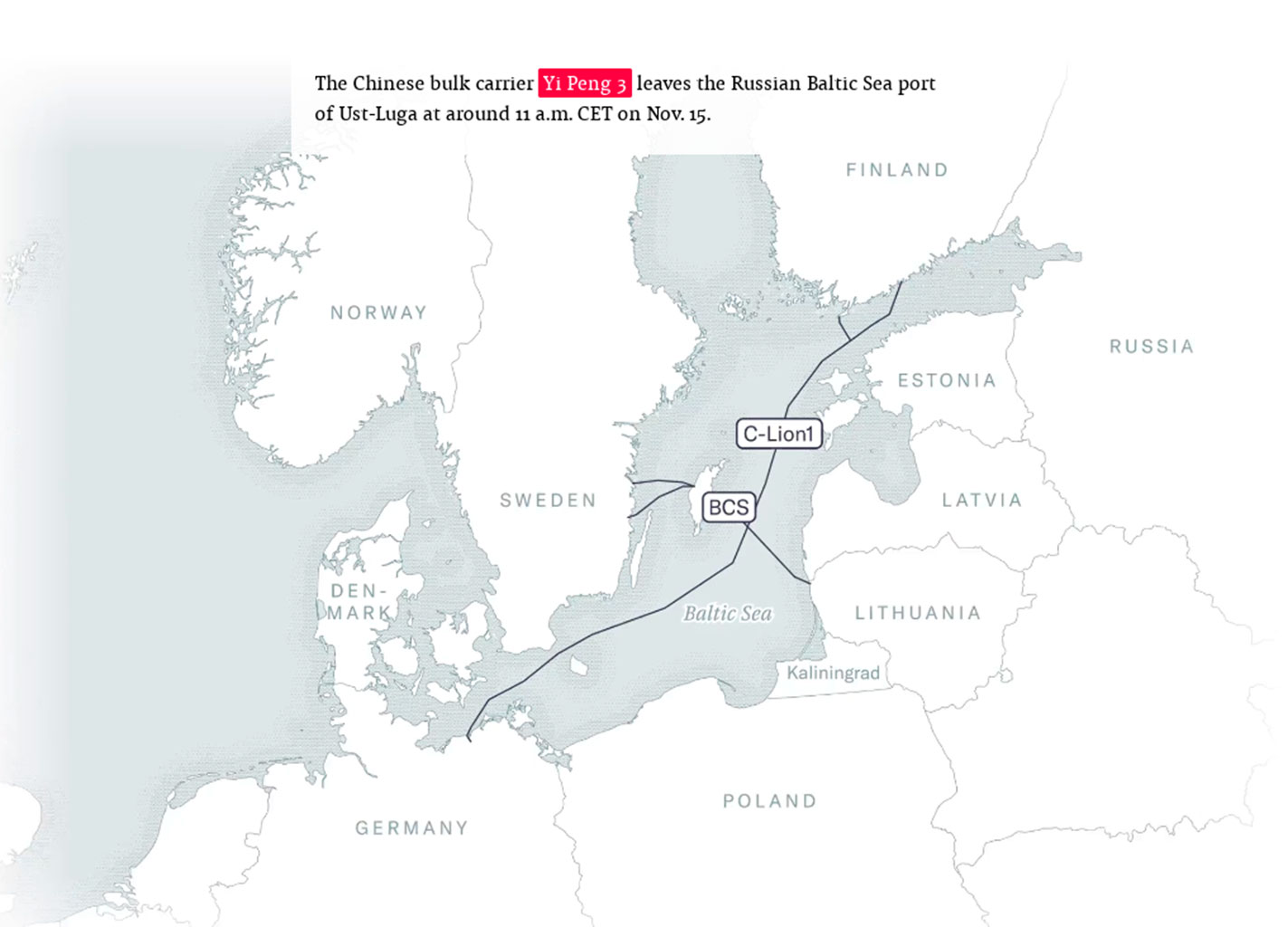
The recent incidents in the Baltic Sea, where two major undersea internet cables were mysteriously severed within a span of hours, have ignited intense debates among global authorities. While European officials have strongly hinted at sabotage, possibly linked to geopolitical tensions, American sources have cautiously suggested that the damage might have resulted from an accidental anchor drag.
Additional Context
These incidents prompted concerns and responses from the affected telecommunications companies:
-
Cinia Oy (Finland): The Finnish data services provider detected the damage to the C-Lion1 cable and assured that Finland’s international data connections remained secure through multiple redundant lines. sources: 3AP News, Carnegie Endowment
-
Telia Lithuania (Lithuania): The telco reported that the BCS East-West Interlink submarine cable between Lithuania and Sweden had been “cut,” affecting about one-third of Lithuania’s internet capacity at the time. sources: Wikipedia, 维基百科,自由的百科全书 (Chinese Wikipedia)
Undersea cables play a crucial role in global communications, carrying nearly 99% of international data traffic. These cables are not only essential for internet connectivity but also for financial transactions, government communications, and military operations. Their security is paramount, and any disruption can have widespread consequences.
Several instances of undersea cable sabotage have been recorded in history, often linked to geopolitical tensions. The Baltic Sea, given its strategic location and proximity to NATO member states and Russia, has been a hotspot for covert activities in the past.
Experts warn that incidents like these, whether accidental or deliberate, highlight the vulnerabilities of modern digital infrastructure. Unlike satellite communications, which are more resilient to physical tampering, undersea cables can be easily accessed by hostile actors, making their security a top priority for governments worldwide.
Timeline of Events
| Date | Incident | Location |
|---|---|---|
| Sunday, November 17, 2024, 10:00 AM | BCS East-West cable cut | Between Lithuania and Sweden |
| Monday, November 18, 2024, 4:00 AM | C-Lion1 cable cut | Between Finland and Germany |
Vessels of Interest
Several ships were present in the area at the time of the incidents. However, one vessel in particular, the Chinese-flagged Yi Peng 3, has drawn significant attention due to its suspicious movements.
| Vessel Name | Flag | Last Known Port | Potential Involvement |
|---|---|---|---|
| Yi Peng 3 | China | Vistino, Ust-Luga port complex, Russia | Crossed both cables at critical times |
Recent Developments
Investigations into the cable disruptions have intensified. Swedish and Finnish authorities have deployed advanced underwater surveillance equipment to analyze the damage. Initial findings suggest that the cables were not simply cut but may have been subjected to mechanical force consistent with dragging from a heavy object, such as an anchor.
Satellite imagery and maritime tracking data have also been reviewed, with special focus on vessels that were in the vicinity during the time of the incidents. Authorities are particularly interested in the routes taken by these vessels before and after the cables were cut.
Meanwhile, diplomatic discussions are ongoing, with NATO allies expressing concern over the security of critical infrastructure. The European Union has also pledged to enhance monitoring of undersea cables and is considering new regulatory measures to prevent future incidents.
Possible Motives
-
- Testing Responses: A state actor might conduct such an operation to assess how quickly and efficiently affected nations respond to critical infrastructure disruptions.
-
- Economic Impact: Disrupting internet and communication networks can cause financial instability, affecting global markets.
-
- Military Strategy: Damaging undersea cables can disrupt military communications and coordination, especially in regions with ongoing geopolitical conflicts.
-
- Cyberwarfare Tactics: Some security analysts speculate that cutting physical infrastructure could be a prelude to broader cyberattacks, testing nations’ ability to mitigate disruptions.
-
- Energy Infrastructure Impact: Many undersea cables are located near critical energy pipelines. Sabotage of these lines could have cascading effects beyond just internet disruptions.
Looking Ahead
The Baltic Sea incidents serve as a wake-up call for policymakers, intelligence agencies, and global businesses that rely on seamless digital connectivity. Efforts to strengthen the resilience of undersea cables include increasing real-time monitoring, deploying AI-driven threat detection systems, and establishing rapid-response teams dedicated to infrastructure security.
As investigations continue, the world watches closely. Whether these incidents were accidental or a prelude to something larger, one thing is clear: the protection of global communication networks has never been more critical.
With conflicting assessments from global intelligence agencies, the truth behind the Baltic Sea cable disruptions remains uncertain. However, whether a targeted act of sabotage or a rare but catastrophic maritime accident, the event serves as a stark reminder of the vulnerability of global communication networks and the growing threats they face.