
Understanding High-Level Design (HLD) and Low-Level Design (LLD) in IT Systems
Building a solid IT system requires comprehensive planning and structured documentation. Two crucial design documents used in this process are High-Level Design (HLD) and Low-Level Design (LLD). Below is a structured explanation of their role and significance.
High-Level Design (HLD)
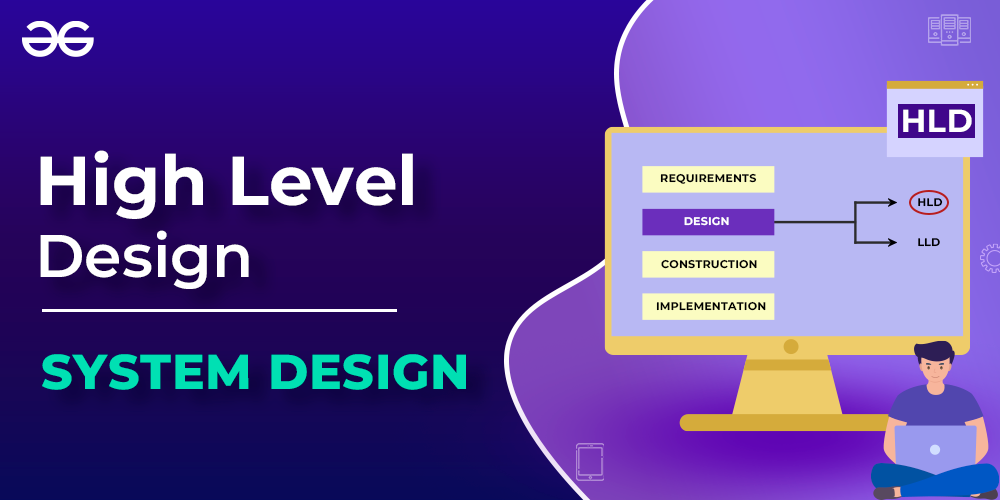
Definition: High-Level Design (HLD) is a phase in the software development lifecycle that provides an overview of the system’s architecture, defining its major components, modules, and their interactions. This document helps stakeholders understand how the system will function at a macro level without going into implementation specifics. HLD acts as a blueprint that guides the development process, ensuring consistency in design and adherence to business requirements.
Overview: HLD offers a structural blueprint of the system, defining major components and their interactions without delving into specifics.
When Delivered: Provided in the early planning phase of a project.
Contents:
- System Architecture – A high-level representation of the entire system.
- Modules and Subsystems – Breaking down the system into distinct, manageable modules.
- Data Flow Diagrams – Illustrations of how data moves within the system.
- Technology Stack – Defining the hardware, software, frameworks, and tools that will be used.
- External and Internal Interfaces – Understanding how different parts of the system communicate.
- Non-Functional Requirements – Addressing performance, scalability, security, and reliability.
Low-Level Design (LLD)
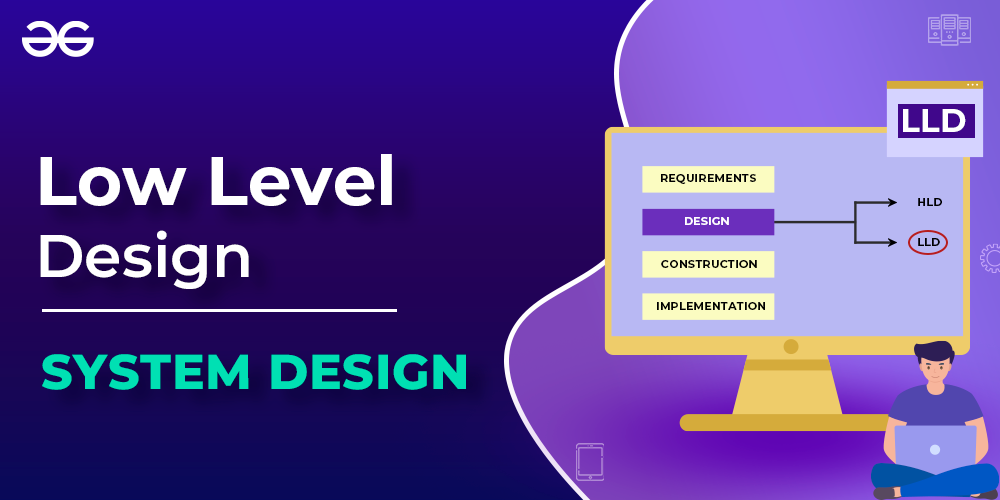
Definition: Low-Level Design (LLD) is a detailed and granular breakdown of the system’s architecture, describing each module’s internal structure, logic, and behavior. LLD is primarily targeted at developers and engineers who need precise specifications to implement the system correctly. This phase ensures all implementation-level details are documented, reducing ambiguity and enabling smoother execution.
Overview: LLD provides a detailed breakdown of each system component, defining interactions, configurations, and implementation specifics.
When Delivered: Created after the HLD, just before the development phase.
Contents:
- Detailed Module Descriptions – A deeper explanation of each module’s role and function.
- Class and UML Diagrams – Graphical representations of class structures and relationships.
- Network Configurations – Detailed networking requirements and IP allocations.
- Algorithms and Pseudocode – Logical representation of program flows.
- Data Structures and Database Schemas – Definition of tables, relationships, and indexing strategies.
- API Specifications and Interface Contracts – Documentation of exposed endpoints, request-response formats.
- Error Handling Mechanisms – Strategies for dealing with exceptions and faults.
- Configuration Files and Environment Settings – System and application-specific settings.
- Unit Tests and Detailed Test Cases – Ensuring correctness and reliability through structured testing.
Comparison at a Glance
| Aspect | High-Level Design (HLD) | Low-Level Design (LLD) |
|---|---|---|
| Definition | Provides a broad architectural overview and component structure. | Details each component, method, and their specific implementations. |
| Purpose | Architecture and high-level overview. | Detailed design and implementation specifics. |
| Timing | Early stages of the project. | Before development, after HLD. |
| Focus | Structure, components, and interactions. | Detailed functionalities, methods, and configurations. |
| Content | System architecture, data flow diagrams, technology stack, and external/internal interfaces. | Detailed module descriptions, class diagrams, network configurations, algorithms, and test cases. |
Both HLD and LLD are crucial in ensuring clarity, reducing uncertainties, and streamlining the path from design to implementation. Proper documentation of both will enhance the quality and maintainability of IT systems.