
Without a SIM card, there’s no mobile calling, no SMS, and no data connectivity – at least for now. But in the near future, it might be replaced.
In the early 1990s, the SIM card was the size of a bank card. “It was quickly replaced by the Mini-SIM,” explains Henning Gajek from the telecommunications portal teltarif.de. Despite its name, the Mini-SIM is the largest variant in use today. It measures 2.5 by 1.5 centimeters and is primarily used in basic mobile phones.
There is also the Micro-SIM, which, at 1.5 by 1.2 centimeters, is an intermediate size. According to Gajek, it is becoming less common. “Newer devices almost exclusively use the Nano-SIM.” The Nano-SIM measures 1.23 by 0.88 centimeters and consists almost entirely of the chip, with a very thin plastic frame. Providers usually supply all card sizes on a single carrier. The required size can be popped out from the pre-cut form or reassembled from the removed parts.
Smaller Cards Aim to Reduce Plastic Waste
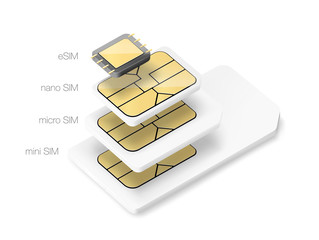
Even the carriers are shrinking. Many providers have halved their size, now roughly as big as half a bank card.
However, insertable SIM cards are becoming obsolete in the medium to long term. The reason for this is the eSIM – an embedded chip already built into the device. Users will only receive a code to activate their tariff profile. This change is also expected to simplify switching contracts.
eSIMs are not only practical for smartphones or tablets. They are already in use in wearables like smartwatches or fitness trackers. With an activated profile, for example, you can make calls directly from a smartwatch – without a connected smartphone.
eSIM from Network Operators
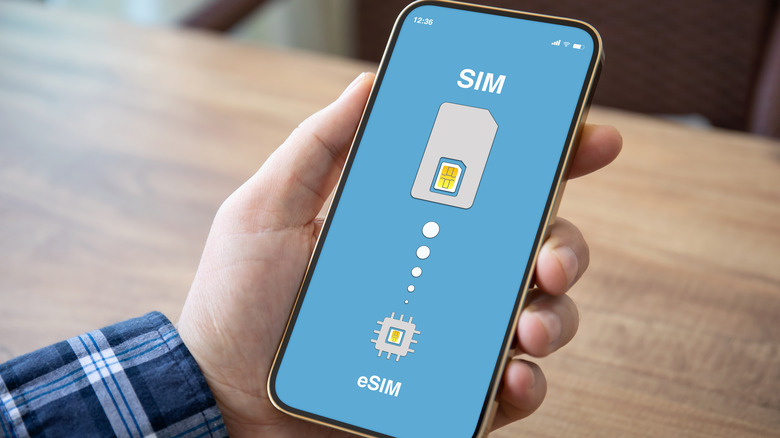
How are network operators adapting? Telefonica offers eSIM as an option to all contract customers. At Telekom, both contract and prepaid customers can use eSIM. Vodafone also provides eSIM as an option for contract customers. A spokesperson stated that they are working on making it available for prepaid customers as well.
Currently, most eSIM-enabled smartphones still have a slot for SIM cards, offering useful dual-SIM functionality – just like phones with two SIM card slots. Dual-SIM allows a phone to be accessible under two numbers, enabling users to keep one for work and the other for personal use. Alternatively, travelers can buy a local SIM card to make calls or browse more cheaply abroad.
With dual-SIM, users can switch between different providers and tariffs. “If someone finishes work at 6 PM and doesn’t want to receive work calls anymore, they can simply deactivate that number until the next morning,” says Gajek.
Two Card Slots Available
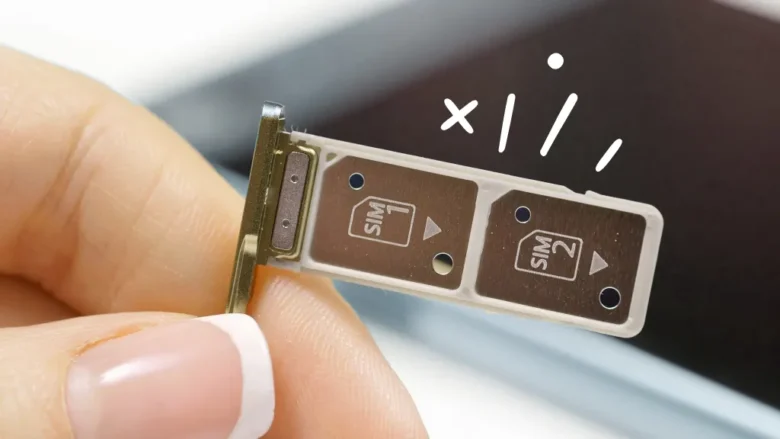
Most dual-SIM-enabled smartphones today have two card slots, one of which is usually a hybrid slot, explains Andreas Seeger from the specialist magazine “Connect.” This means the second slot can hold either a SIM card or a memory card. To avoid having to choose between storage expansion and a second SIM card when the phone “fills up,” Seeger recommends buying a device with sufficient internal storage.
Another variant of SIM usage is called Multi-SIM. This allows a single contract to be used on multiple devices, such as a second or even third mobile phone, or on a tablet or smartwatch.
The additional SIM cards required for this are rarely included in contracts and usually cost extra, Henning Gajek notes – typically around five euros per eSIM profile or SIM card. With this setup, you are reachable on the same number everywhere and can use the contract’s benefits across all devices.
Issues with Multi-SIM
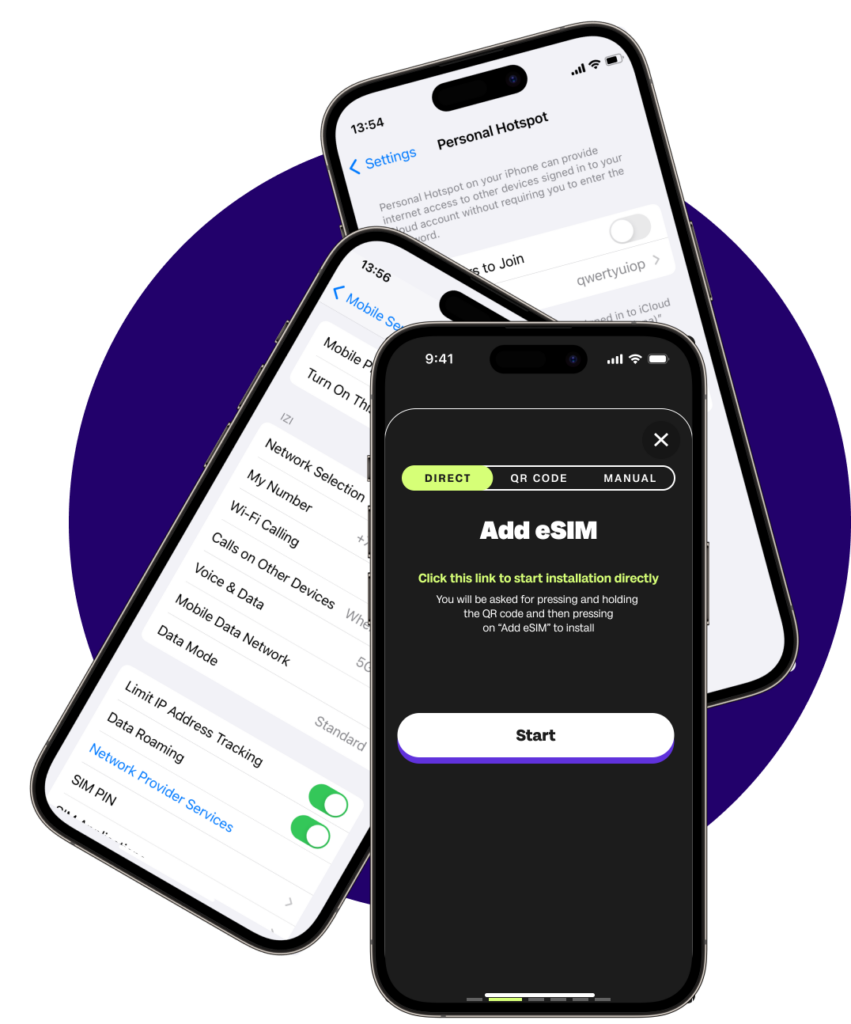
Proper settings are crucial for Multi-SIM. “You need to specify which device will receive SMS messages,” Gajek says. For example, if you’re using the “wrong” smartphone and need an SMS TAN for a bank transfer, you could face a problem.
Another annoyance with Multi-SIM is that not all providers allow you to change the setting where all devices ring simultaneously for an incoming call, criticizes Andreas Seeger. In general, there are significant differences in the configuration options offered for Multi-SIM.